UN
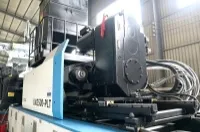
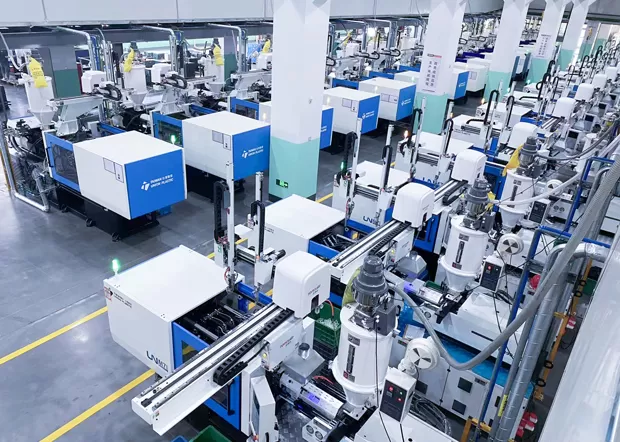
Servo Hydraulic Injection Molding Machine
High-precision injection molding is rarely limited by a single machine specification. Dimensional consistency, cycle stability, energy consumption, mold protection, injection repeatability, and process response all interact. For manufacturers producing tight-tolerance components, the machine must therefore be selected as a complete process platform rather than simply by injection volume or nominal clamping force.
A hybrid machine can be particularly effective when the application requires the responsiveness of electric motion together with the high-force capability and established hydraulic functions associated with conventional molding systems. The right configuration depends on the material, mold architecture, shot size, cycle profile, tolerance requirements, and production volume.
The primary advantage of a hybrid injection moulding machine is the ability to combine different drive technologies where they provide the greatest process benefit. Electric or servo-driven functions can provide highly responsive movement and repeatability, while hydraulic systems can deliver substantial force where it is required.
For precision production, this distinction matters because not every movement in an injection molding cycle places the same demands on the machine. Injection response, screw positioning, mold opening and closing, pressure holding, and ejector movement each have different process requirements.
| Selection Factor | Why It Matters in Precision Molding |
|---|---|
| Injection repeatability | Helps maintain consistent shot weight and dimensional stability. |
| Pressure control | Reduces variation during filling and packing. |
| Servo response | Allows more controlled machine movement and process adjustment. |
| Clamping stability | Supports consistent mold closure and parting-line control. |
| Process monitoring | Provides useful data for identifying drift and abnormal cycles. |
| Energy management | Can reduce unnecessary energy consumption during production. |
The mold should be evaluated before selecting the machine. A high-precision mold may require substantially different machine characteristics from a large automotive mold, even when both produce plastic components.
Engineers should examine mold dimensions, tie-bar spacing, mold weight, required opening stroke, ejector requirements, cavity pressure, projected area, and expected cycle time. A machine that technically accommodates the mold may still be poorly matched if its operating range leaves little room for process adjustment.
Multi-component applications require an additional level of analysis. When the product contains two materials, two colors, or sequentially molded components, the machine must support the required injection sequence without introducing unnecessary transfer time or positioning error.

The two color injection molding process becomes attractive when manufacturers need integrated multi-material production rather than separate molding and assembly operations.
Typical applications include components requiring a rigid structural material combined with a soft-touch layer, products with contrasting visual sections, sealed interfaces, and components where two materials must bond within a controlled molding sequence.
The important consideration is not simply whether the machine can inject two materials. The process must also provide appropriate control over injection timing, mold indexing or rotation, material compatibility, pressure profiles, and cooling behavior.
Compatibility between the two molding materials.
Required shot volume for each injection unit.
Relative injection pressure and speed requirements.
Mold rotation or indexing requirements.
Cooling time and thermal interaction between materials.
Required cycle time at production volume.
For high-volume production, the machine should be evaluated based on the complete cycle rather than the theoretical speed of one individual movement. A faster injection phase does not necessarily create a faster production line if mold rotation, cooling, handling, or secondary operations become bottlenecks.
A two platen injection molding machine can be advantageous when mold dimensions and clamping requirements become substantial. Compared with traditional three-platen arrangements, the two-platen architecture can provide a more compact machine layout while maintaining the clamping performance required by larger molds.
For precision applications, the benefit is not simply machine size. The clamping system must distribute force appropriately across the mold and maintain stable conditions throughout the cycle. Excessive or poorly distributed clamping force can increase mold stress and may contribute to unnecessary wear.
Production consistency depends on how accurately the machine can reproduce the programmed process from one cycle to the next. Servo-hydraulic technology can help by controlling hydraulic functions more efficiently and responding according to actual process demand rather than maintaining constant pump activity throughout the entire cycle.
This can be particularly useful in production environments where the machine operates continuously for thousands or millions of cycles. Reduced idle energy consumption can become a meaningful operational factor, while stable motion control can help engineers maintain repeatable process windows.
| Parameter | Engineering Consideration | Production Impact |
|---|---|---|
| Clamping force | Must accommodate projected part area and cavity pressure. | Prevents flash while avoiding unnecessary mold stress. |
| Injection pressure | Should match material viscosity and flow path complexity. | Influences filling stability and process margin. |
| Injection speed | Must suit gate design and material behavior. | Affects filling time, weld lines, and surface quality. |
| Screw diameter | Should correspond to shot size and material requirements. | Influences plasticizing performance. |
| Opening stroke | Must accommodate the mold and part-removal requirements. | Determines mold accessibility and cycle efficiency. |
| Controller capability | Should provide adequate process monitoring and adjustment. | Supports repeatability and troubleshooting. |
Oversizing is often treated as a safe strategy, but it can create its own problems. A machine operating far below its practical range may provide more nominal capacity than the application needs while increasing capital cost, floor-space requirements, and potentially energy consumption.
A better approach is to establish the actual process window first. Engineers should calculate the projected area, estimate cavity pressure, determine shot requirements, evaluate mold dimensions, and then consider a reasonable engineering margin.
The machine should have sufficient capacity for process variation without being selected solely on the basis of maximum theoretical capability.
In high-precision molding, a machine that produces one exceptionally fast cycle is less useful than a machine capable of maintaining a stable cycle over an extended production run.
Variations in melt temperature, injection pressure, screw position, cooling conditions, and mold temperature can gradually influence part dimensions. Machine selection should therefore prioritize controllability and repeatability alongside headline specifications.
A factory acceptance evaluation should be based on the actual production mold and material whenever practical. Engineers can examine shot-weight variation, cycle-to-cycle pressure curves, injection position repeatability, mold protection response, energy consumption, and finished-part dimensions.
It is also useful to discuss future production requirements with the machine supplier. A machine that is appropriate for today's product may need additional flexibility if the manufacturer plans to introduce multi-material components, larger molds, or tighter tolerances later.
Yes. A properly configured hybrid system can provide the motion control, pressure management, and repeatability required for demanding applications. Suitability ultimately depends on the machine configuration, mold, material, and process requirements.
No. Injection speed must be matched to the material, gate design, mold geometry, and thermal behavior. Excessive speed can create shear heating, air entrapment, or other molding defects.
The required force depends on projected part area, cavity pressure, mold design, material, and safety margin. It should be calculated for the actual application rather than selected from part weight alone.
They can be, particularly when servo-driven systems reduce unnecessary hydraulic energy consumption. Actual savings depend on machine configuration, cycle profile, operating conditions, and production schedule.
Yes, when the machine is specifically configured for multi-component production. The injection units, mold interface, indexing system, controller, and process sequence must all be compatible with the application.
There is no single specification that determines suitability. The best engineering approach is to evaluate clamping, injection, mold dimensions, process control, cycle time, material behavior, and future production requirements together.
Choosing a hybrid injection molding machine for high-precision production is fundamentally a process-engineering decision. The machine must provide sufficient capacity while maintaining controllable, repeatable conditions throughout the molding cycle. When mold architecture, material behavior, multi-component requirements, energy use, and long-term production objectives are evaluated together, manufacturers can select equipment that supports both dimensional consistency and sustainable production efficiency.
https://committee.iso.org/standard/68000.html
https://euromap.org/technical-issues/technical-recommendations